The Default of Photography is Documentary: Hiroshi Sugimoto in transforming Photography to Art
By it’s very nature, photography captures a sinl;e, immediate moment in time. Without further considerations to the medium, collections of these images simply become documentation of tiny fragments in time. A common pieve of advice for new photographers is to “create” a justification as to why you may be taking a photo. Having a clear idea makes it much easier to de-escalate situations if somebody feels you have invaded their privacy. With this rehearsal of reasonings prepared in a person’s mind. it slowly turns into a belief. The Justifications slowly form into 2 sides to photography come into those arguing for its artistic value vs those arguing for its documentary value.
In the argument for documentary work, a common justification I hear from photographers is that belief that they consider this task of documentation of the world of paramount imporance. Viewed not just as their right to do so, but as a higher calling that they are obliged to fulfill.
On the other hand, for the argument of their street work carrying genuine artistic value. To most observers, however, that artistic merit is simply missing; as the main focus of what is being chosen toi be captured is whatever happens to be catching their eye, rather than working with deeper intent.
For a very long time i had been wondering how I could inject this artistic intent into what i had been doing. I am fortunate to have had the experience Hiroshi Sugimoto’s work in the Singapore Art Museum which has helped me understood what I may have been lacking to do so.
Hiroshi Sugimoto uses photographic basics and photographic thinking as a catalyst and the basis of his works. Expanding through multiple mediums but borrowing wisdoms of others.
“Dioramas” & “Portraits”
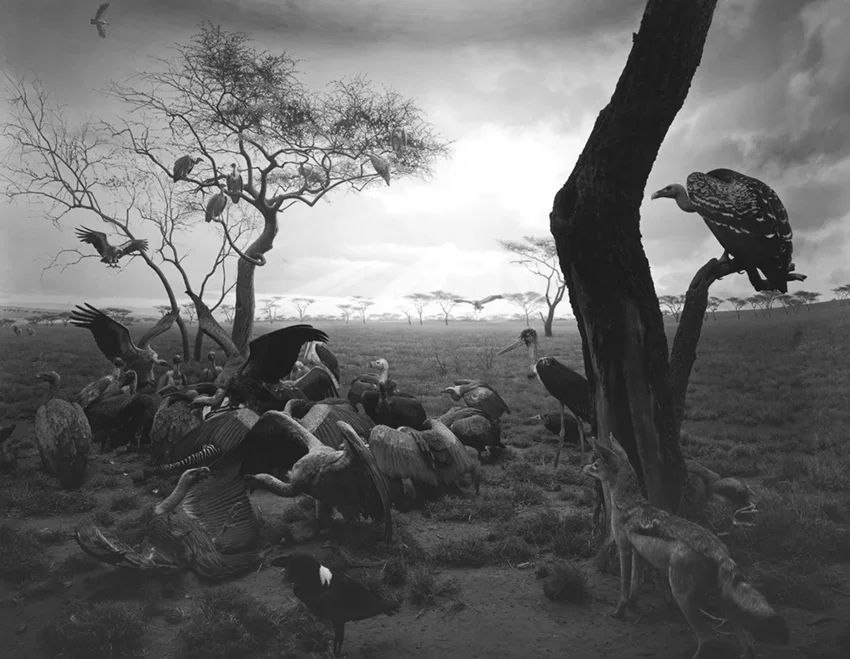
Hyena - Jackal - Vulture, 1976 Hiroshi Sugimoto
2 Collections “Dioramas” and “Portraits” stood out most to me. Distilled down to its core elements, neither of the subjects were his creation nor of his design. These were simply images taken of museum exhibits of animals and recreation of famous celebrities. It is the further transformation from an unrealistic museum diorama or wax statue into a scene that could be passed off as reality through a unique perspective created through the choice of medium and framing. The subject was never these statues in the museum or carefully crafted sculptures, but rather the statement on how we can shift our perspective to transform the world directly in front of us.
“Theaters”
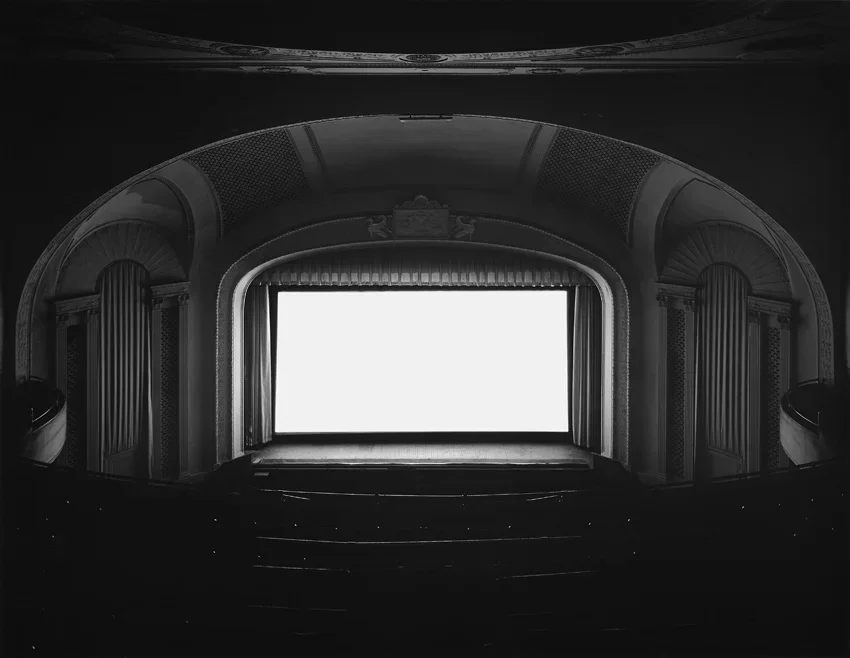
U.A. Play House, New York, 1978 Hiroshi Sugimoto
A staple in Hiroshi’s works is the flexibility in a canvas for allowing viewers to interpret meanings in his works. In this collection, a movie with hundred thousands of frames are simply compressed into one showing the screen as a pure blinding light, while gently illumiating the surrounding architecture of the cinema.
There have been many interpretations discussing the meaning behind the works, but i’d like to argue that there possibly wasn’t much intention behind the idea when Mr Sugimoto developted the idea initially. He had simply stated ‘One evening while taking photographs at the American Museum of Natural History, I had a near-hallucinatory vision. My internal question-and-answer session leading up to this vision went something like this: "Suppose you shoot a whole movie in a single frame? " The answer: "You get a shining screen. " ‘.
The white screen itself was a canvas for theories on how people interpreted the compression and fossilization of time itself or the screen being overthinking and the mirror of our consciousness showing a story but in the huge amounts of images crammed into a single frame, it turns in to a blinding blur.
“Seascapes”
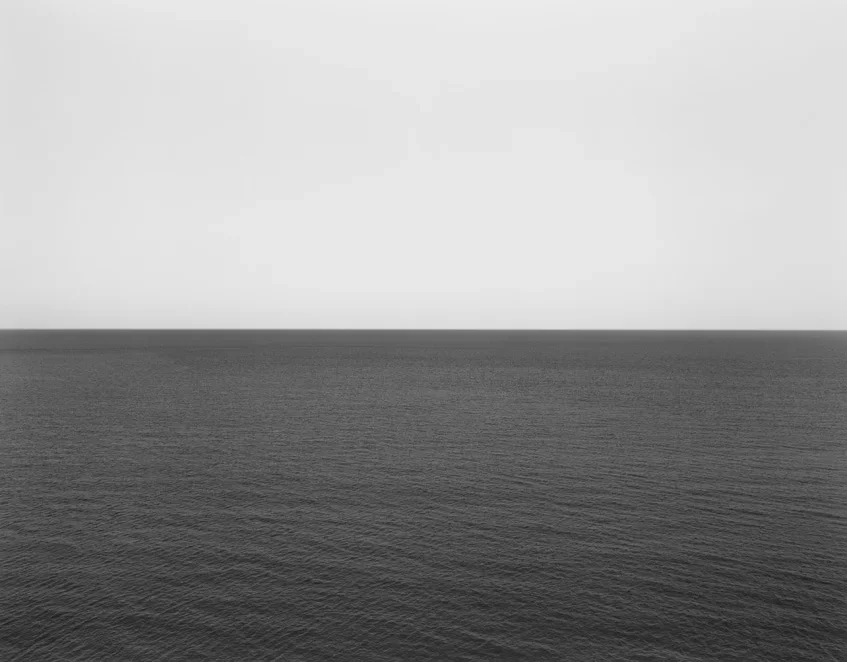
Caribbean Sea, Jamaica, 1980 Hiroshi Sugimoto
Hiroshi Sugimoto’s work is rooted in conceptual art: the execution process is the core of the work, while the final interpretation is left to the viewers to explore. The sweeping seascapes and generally empty images of other collections do not cry for your attention in specific areas. They allow imagination and reasoning to take over.